Dust and Sunset
Dust and Sunset
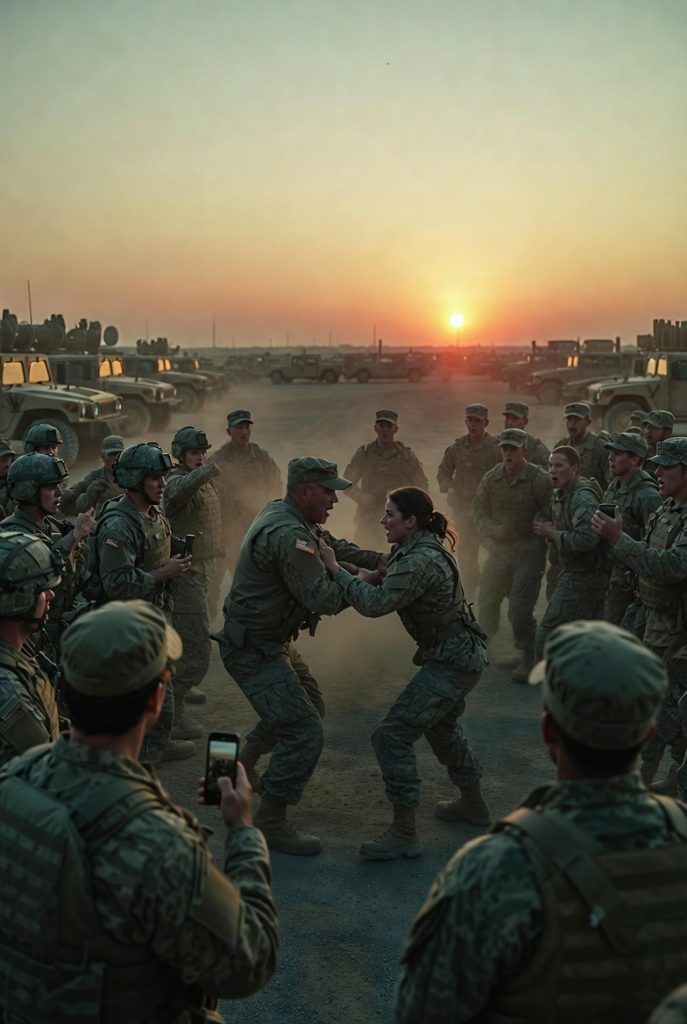
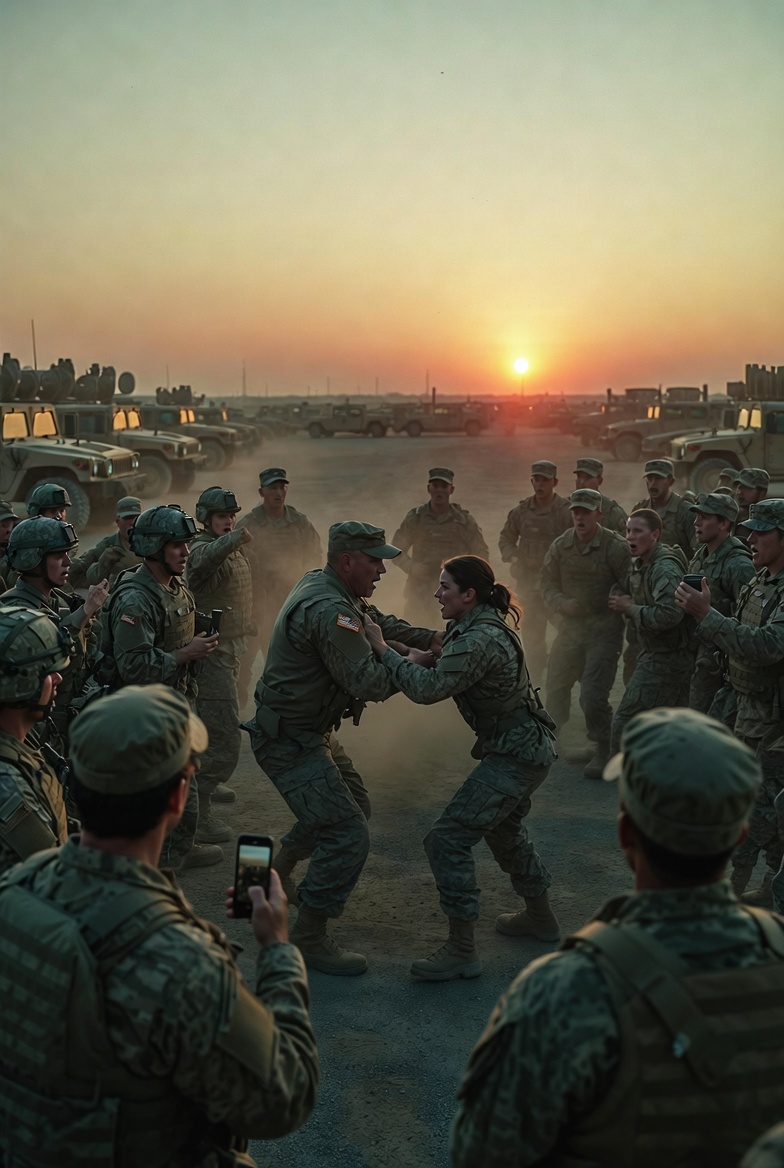
Forward Operating Base Echo-7, somewhere in the high desert of New Mexico. 18:42 hours. The sun hung low and bloody on the horizon, turning the sand the color of rust and casting long shadows across the gravel motor pool. A loose circle of soldiers—platoon from 2nd Battalion, 75th Ranger Regiment—had gathered in the open dirt patch between the Humvees and the ammo bunkers. No one had called it a fight. No one had to. Word travels fast on base when someone crosses a line.
Sergeant First Class Derek Harlan—thirty-one, built like a linebacker gone to seed, three tours, perpetual chip on his shoulder—stood in the center. Opposite him: Specialist Riley Voss, twenty-four, five-foot-six in boots, lean muscle under her ACUs, hair pulled back tight under her patrol cap. She had just finished a live-fire range qual where she outshot half the platoon, including Harlan. He hadn’t taken it well.
The shove came without warning.
Harlan stepped forward, chest puffed, and drove both palms into Riley’s shoulders. Hard. She staggered back two steps, boots skidding in the loose gravel. Dust puffed up around her ankles like smoke.
The circle went dead quiet. A few soldiers shifted weight, uneasy. One private—barely out of basic—reached for his phone instinctively. Another followed. Screens lit up in the fading light.
Harlan’s voice cracked the silence, low and venomous.
“You think you’re hot shit because you can hit paper at three hundred? This ain’t a video game, princess. You don’t belong out here.”
Riley straightened slowly. No flinch. No shout back. Her eyes—storm-gray, steady—locked on his. She adjusted the sling of her slung M4 with deliberate calm.
Then she moved.
It wasn’t flashy. No wind-up. Just economy of motion, years of Brazilian jiu-jitsu and Army combatives drilled into muscle memory.
She closed the gap in half a heartbeat, ducked under his instinctive grab, hooked his right arm, pivoted on her heel, and used his own momentum against him. A textbook hip throw—clean, brutal, textbook. Harlan’s feet left the ground. Two hundred and twenty pounds of sergeant arced through the air and slammed into the dirt on his back with a thud that knocked the wind out of him and sent a fresh cloud of dust rolling outward.
The circle gasped as one. Phones jerked higher. Someone muttered “Holy shit.”
Riley stepped forward, planted one boot on either side of his chest—not pinning him, just standing over him. She reached down, adjusted the Velcro straps on her tactical vest with the same calm precision she used to zero her rifle. Dust motes danced in the slanted sunset light around her silhouette.
Harlan lay there wheezing, eyes wide, face red with more than exertion. The arrogance had shattered; what remained was raw shock and the dawning realization that he had just been dismantled in front of his own platoon.
Riley looked down at him. Voice low, but it carried in the hush.
“Next time you put hands on someone, Sergeant… make sure they can’t put them back.”
She didn’t wait for a reply. She turned, walked through the circle. Soldiers parted without a word. A few nodded—small, almost imperceptible. The private with the phone lowered it slowly, thumb hovering over the record button, unsure if he should post or delete.
Behind her, Harlan pushed himself up on elbows, coughing dust. No one moved to help him.
The sun dipped lower, painting everything in fire and shadow. Somewhere down the line, a diesel engine coughed to life. Normal base sounds resumed, but the air felt different now—charged, recalibrated.
Riley kept walking toward the barracks. She didn’t look back.
Later that night, in the dim glow of a phone screen in a bunk, the video would start circulating. Grainy, shaky, but unmistakable. No sound at first—just the thud, the gasp, the silence. Then someone would add text overlay in bold white letters:
Full story in the first comment.
By 0200, it had reached company command. By morning formation, the entire battalion would know.
And Sergeant Harlan would learn—painfully, publicly—what happens when you underestimate someone who has already proven they can carry the same load, shoot the same groups, and now, evidently, throw you farther than you thought possible.
Riley Voss didn’t need to say another word.
The dirt still clinging to her boots said enough.
End.
About The Author