
The Predator Becomes the Prey
The Predator Becomes the Prey
Thomas Vallières had always believed power was a birthright.
At thirty-four he owned three nightclubs in Paris’s most fashionable arrondissements, drove a matte-black Aston Martin DB11, and wore Brioni suits the way other men wear T-shirts. He moved through rooms like he owned them because, more often than not, he did. People laughed at his jokes even when they weren’t funny. Waiters comped his drinks. Women smiled when he looked their way.
And then there was Léa.
Twenty-six, dark hair cut in a sharp bob, eyes that could freeze mercury, and a quiet strength that Thomas mistook for shyness. He had met her at one of his own openings six months earlier. She had come with friends, stayed after closing, and left with him. He considered it conquest. She considered it curiosity. Somewhere in between, they became a couple—at least in the photographs that appeared on his Instagram stories.
He liked showing her off. Liked the way heads turned when she walked beside him in heels and a dress he had chosen. Liked reminding her—in small, casual ways—who paid for the clothes, the dinners, the weekends in Courchevel. He never raised his voice in public. He didn’t need to. A look was enough. A hand on her wrist a little too tight. A whispered remark that made her smile falter for half a second.
Most people never noticed.
Most people weren’t paying attention.
But someone always is.
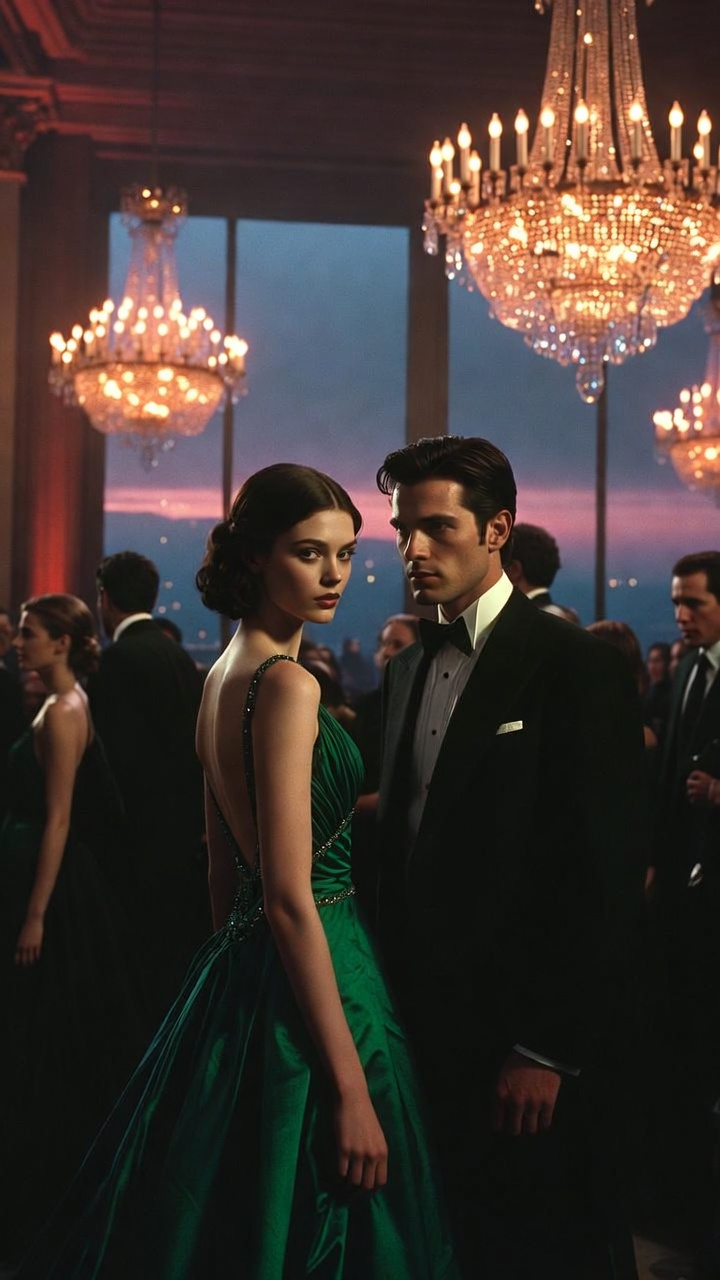
They chose Le Clarence that night—two Michelin stars, velvet banquettes, a wine list longer than most novels. Thomas had reserved the corner table near the fireplace. Léa wore the black silk dress he had bought her the week before; he wore the navy Brioni with the burgundy pocket square. Everything was perfect. Until it wasn’t.
The argument started quietly.
Thomas had ordered for both of them—foie gras, turbot, a 2015 Montrachet—without asking. Léa had only wanted the vegetable tasting menu. When she pointed it out, he laughed. Loudly. The laugh that said don’t be difficult.
She answered softly. Too softly.
He leaned in, smile gone.
“Don’t embarrass me,” he murmured.
She looked at him—really looked—and said, “I’m not the one embarrassing anyone.”
The table went still.
Thomas felt the heat rise under his collar. He hated being contradicted. Hated it more when other tables might have heard.
He slapped her.
Not hard enough to bruise, but hard enough to make the sound carry. A clean, open-palmed crack that silenced the room like a gunshot. Léa’s head snapped sideways. Her cheek bloomed red instantly. A few gasps. A dropped fork. Then—silence.
Thomas straightened his cufflinks. “You’ll apologize,” he said calmly.
Léa touched her face. Slowly. Deliberately. When she turned back to him, her eyes were dry. Not wide with shock. Not wet with shame.
Calm.
The same calm a sniper wears before squeezing the trigger.
She reached into her clutch, pulled out her phone, and pressed one button. Speakerphone.
A man’s voice answered on the first ring—low, gravelly, calm as a frozen lake.
“Oui, ma chérie ?”
Léa never took her eyes off Thomas.
“Papa,” she said. “Il m’a frappée.”
The line went dead.
Thomas laughed—short, disbelieving. “Your father? Really? What’s he going to do, ground me?”
He reached for his wineglass.
A shadow fell across the table.
The server who had been quietly refilling water glasses all evening was suddenly standing beside Thomas. He was not young—late fifties, perhaps early sixties—but the way he carried himself made age irrelevant. Six feet tall, shoulders wide enough to block light, hands scarred and steady. Black waistcoat, white shirt, sleeves rolled once. The name tag read simply: Étienne.
He placed the water pitcher on the table with deliberate care.
Then he placed one hand on Thomas’s shoulder.
The grip was not violent. It was surgical. Fingers found the precise spot between trapezius and clavicle and pressed—once.
Thomas’s arm went numb to the elbow. The wineglass slipped from his fingers and shattered on the floor.
The restaurant manager hurried over. “Monsieur Étienne, is there a problem?”
Étienne never looked away from Thomas.
“No problem,” he said quietly. “Just a family matter.”
The manager hesitated, then retreated.
Thomas tried to stand. The hand on his shoulder pressed again—harder. He stayed seated.
Étienne leaned down until his mouth was close to Thomas’s ear.
“You touched my daughter,” he said. The words were calm. Almost gentle. “In front of fifty witnesses. In my restaurant.”
Thomas swallowed. “I—I didn’t know—”
“You didn’t ask.”
Étienne straightened. He looked at Léa. His expression softened for the first time.
“Viens, ma puce.”
Léa stood. She looked at Thomas one last time—not with hate, not with triumph. With something colder.
Pity.
She walked past him without another word.
Étienne waited until she was out of earshot.
Then he leaned down again.
“I was Groupe d’Intervention de la Gendarmerie Nationale for twenty-three years,” he said. “I trained men to kill with a pencil. I taught them how long a person can live without air. Without water. Without hope.”
Thomas tried to speak. Nothing came out.
“I retired so my daughter would never have to see that part of me,” Étienne continued. “But you just brought it back.”
He released Thomas’s shoulder.
Thomas sagged forward, gasping.
Étienne straightened his waistcoat.
“You have forty-eight hours to leave Paris. Sell your clubs. Transfer the deeds. Disappear. If I ever see your name in the same city as my daughter again, I will not be wearing this waistcoat.”
He turned to leave.
Thomas found his voice—hoarse, shaking.
“You can’t do this. I have lawyers. I have—”
Étienne paused.
He looked back.
“You have nothing,” he said. “You had power because people let you have it. That permission just ended.”
He walked away.
The restaurant watched in silence.
Thomas sat alone at the table, wine pooling around broken glass, the chair beside him empty.
Two days later the headlines appeared:
Nightlife Magnate Sells All Assets Overnight – Abrupt Retirement Cited
No explanation. No comment.
Thomas Vallières vanished from Paris.
Some said he moved to Dubai. Some said South America. Most didn’t care.
Léa never spoke of that night again.
She kept the grey scarf her father had draped over her shoulders as they left the restaurant.
And every time she passed the Clarence, she smiled—just a little.
Because sometimes the most dangerous predators are the ones who never need to roar.
They simply wait.
And when the moment comes, they remind the world who has always been in control.

About The Author