The Badge in the Floodlight
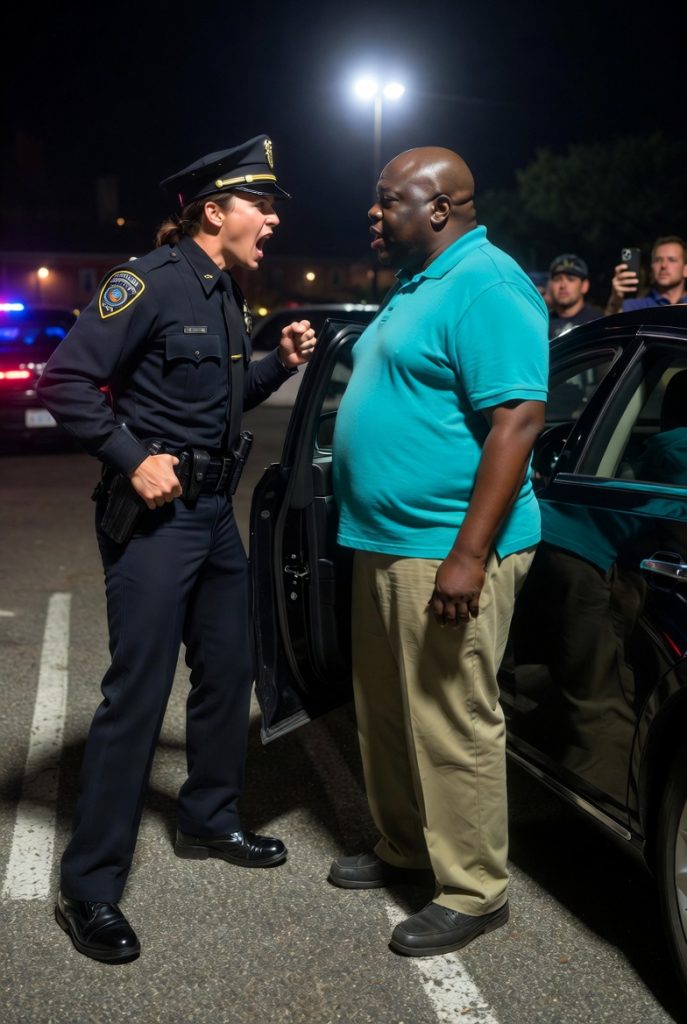
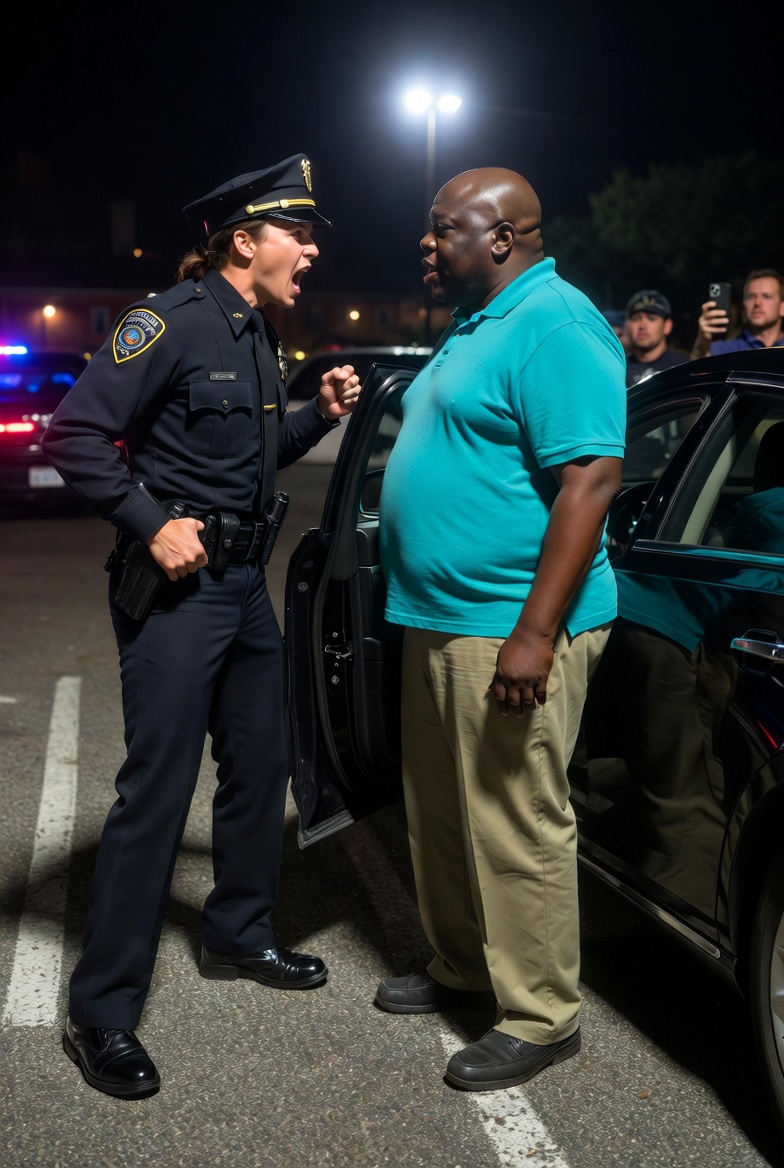
The parking lot behind the county courthouse was a concrete island under siege by night. Harsh white floodlights from the lampposts carved sharp shadows across every surface; the rotating red-and-blue pulses from the single patrol car painted everything else in epileptic color. It was 11:17 p.m. on a Thursday in late October. The air smelled of cooling asphalt and distant rain.
Judge Marcus Harlan stood beside his black S-Class Mercedes, driver’s door still open, keys dangling from his left hand. Turquoise polo shirt tucked neatly into beige chinos, loafers polished but not ostentatious. He had just finished a late chambers session—reviewing sentencing memoranda for tomorrow’s calendar—and was heading home to the quiet house on Maple Ridge where his wife would already have left a plate in the warmer.
The young officer—early twenties, buzz cut, name tag reading OFFICER T. REED—had pulled in behind him thirty seconds earlier, lights blazing, siren silenced only when the car stopped. Reed stepped out fast, hand already riding the grip of his holstered Glock.
“Hands where I can see them! Get away from the vehicle—NOW!”
Marcus raised both palms slowly, deliberately, fingers spread. No sudden movements. He had given this lecture to rookies in diversity training sessions for eight years; he knew the script by heart.
Reed closed the distance in three long strides, boots loud on the pavement.
“Is this YOUR car, sir? Show me your hands—both of them! Step away from the door!”
Marcus kept his voice level, almost conversational.
“This is my car, officer. I am a judge.”
He reached—very slowly—with his right hand toward the interior breast pocket of the lightweight windbreaker he had draped over the driver’s seat earlier. Reed’s hand twitched toward the holster.
“STOP! Keep your hands visible!”
Marcus paused, palms up again.
“I’m going to reach into my jacket pocket—very slowly—for my identification. It’s a judicial badge and state ID. I’m not reaching for anything else.”
Reed’s jaw tightened. “Do it slow. Real slow.”
Marcus extracted the slim black leather wallet. He held it out flat on his open palm like an offering.
Reed snatched it with his left hand, keeping his right near the weapon. He flipped it open.
The gold-embossed seal of the Superior Court of the State caught the floodlight first. Then the photo—Marcus, robe on, calm gaze. Then the words: HON. MARCUS T. HARLAN, JUDGE, CRIMINAL DIVISION.
The color drained from Reed’s face in less than two heartbeats, then flooded back in a violent flush from neck to hairline. His mouth opened. No sound came out. The hand that had been hovering near his gun fell limp to his side. The wallet trembled slightly in his grip.
Behind them, near the low chain-link fence that separated the lot from the sidewalk, three bystanders had already formed a silent semicircle. Two college-age kids in hoodies and an older woman in a quilted coat, grocery bag forgotten at her feet. All three phones were up, screens glowing blue-white in the darkness.
One of the young men whispered, loud enough to carry: “Oh my God… this is going viral tonight.”
The red-and-blue lights kept sweeping across their faces like search beams.
Marcus looked straight at Reed. No anger. No triumph. Just the quiet, patient disappointment of a man who has seen this scene play out too many times—usually ending very differently.
“Sometimes,” he said softly, but with perfect clarity, “we judge too quickly.”
The words landed like stones dropped into still water. Reed flinched as though struck.
For five long seconds no one moved. The camera of the world—the three phones, the cruiser dash cam, the courthouse security lens high on the pole—captured everything in one unbroken, merciless take: the judge with hands still raised in practiced calm, the officer frozen with shame burning across his features, the wallet still open between them like an accusation no one had spoken aloud.
Then Marcus lowered his hands, very gently.
“May I have my identification back, Officer Reed?”
Reed blinked. Swallowed. Extended the wallet with both hands now, as though it were made of glass.
“Y-yes, sir. Your Honor. I— I’m sorry. I didn’t—”
Marcus took it without comment, slipped it back into his pocket.
“I know what you saw,” he said. “Luxury car. Late hour. Black man alone. You ran the plate?”
Reed nodded, miserable. “Came back clean. But the description… I thought—”
“You thought what the training and the stereotypes told you to think.” Marcus closed the car door with a soft click. “Tomorrow morning, 8 a.m., my courtroom. You’re going to sit in the back row during calendar call. Not in uniform. In plain clothes. You’re going to watch what happens when assumptions meet real people. And then you’re going to write me a one-page reflection on tonight. Not an apology. A reflection. Understood?”
“Yes, Your Honor.”
Marcus studied him a moment longer.
“You’re young. You can still choose who you become when the lights flash and the adrenaline hits. Choose carefully.”
He walked around to the driver’s side, got in, started the engine. The Mercedes purred to life—quiet, expensive, unhurried.
As he pulled away, the red-and-blue lights still painted the back of his car in alternating guilt.
The three bystanders lowered their phones slowly. The older woman shook her head and muttered, “Lord have mercy.”
Officer Reed stood alone in the center of the lot, floodlights bleaching him bone-white, cruiser lights still pulsing like a heartbeat he could no longer control.
He looked down at his own hands—the same hands that had snatched the wallet—and for the first time in his short career felt the exact weight of the badge on his chest.
It was heavier than he remembered.
End.