
AFTERSHOCK (Liquid Chaos)
AFTERSHOCK (Liquid Chaos)
The tunnel had always felt eternal—miles of reinforced concrete carved beneath the city like the arteries of some sleeping giant. For Sarah Kane, it was just another late-night commute on Line 7, the fluorescent lights buzzing overhead, the metallic scent of rails and damp stone in her nostrils. She had been riding this route for seven years: headphones in, eyes half-closed, letting the rhythm of the train dull the edges of another fourteen-hour shift at the trauma center. Tonight, though, the giant woke up.
It started with a low groan, the kind you feel in your teeth before your ears register it. Then the world bucked.
The train lurched sideways like a wounded animal. Screams erupted as passengers were hurled into seats, poles, each other. Sarah’s shoulder slammed into a metal handrail; pain flared white-hot down her arm. The lights flickered once, twice—then died. Emergency strips glowed a sickly orange along the floor, turning faces into hollow masks.
Before anyone could process what was happening, the second shock hit. Harder. Deeper.
A deafening crack split the air. Somewhere ahead, the tunnel ceiling gave way in a thunderous cascade. Chunks of concrete the size of cars rained down, crushing the front three cars like tin foil. Dust exploded inward, thick and choking, coating tongues and eyes. Sarah tasted cement and blood—hers or someone else’s, she couldn’t tell.
The train ground to a halt, tilted at a grotesque angle. In the sudden stillness, people began to move: crawling, clawing, calling names. Sarah pushed herself up, coughing violently. Her right arm hung useless, probably dislocated. She ignored it.
Then she heard it.
A deep, wet roar from behind them. Not machinery. Not collapse.
Water.
The main conduit—a massive stormwater overflow pipe that ran parallel to the transit line—had ruptured under the strain. Black, frigid liquid surged through the breach like ink poured into clear water, rising fast. It swallowed the wreckage of the forward cars first, then rushed toward the survivors in a solid, roaring wall.
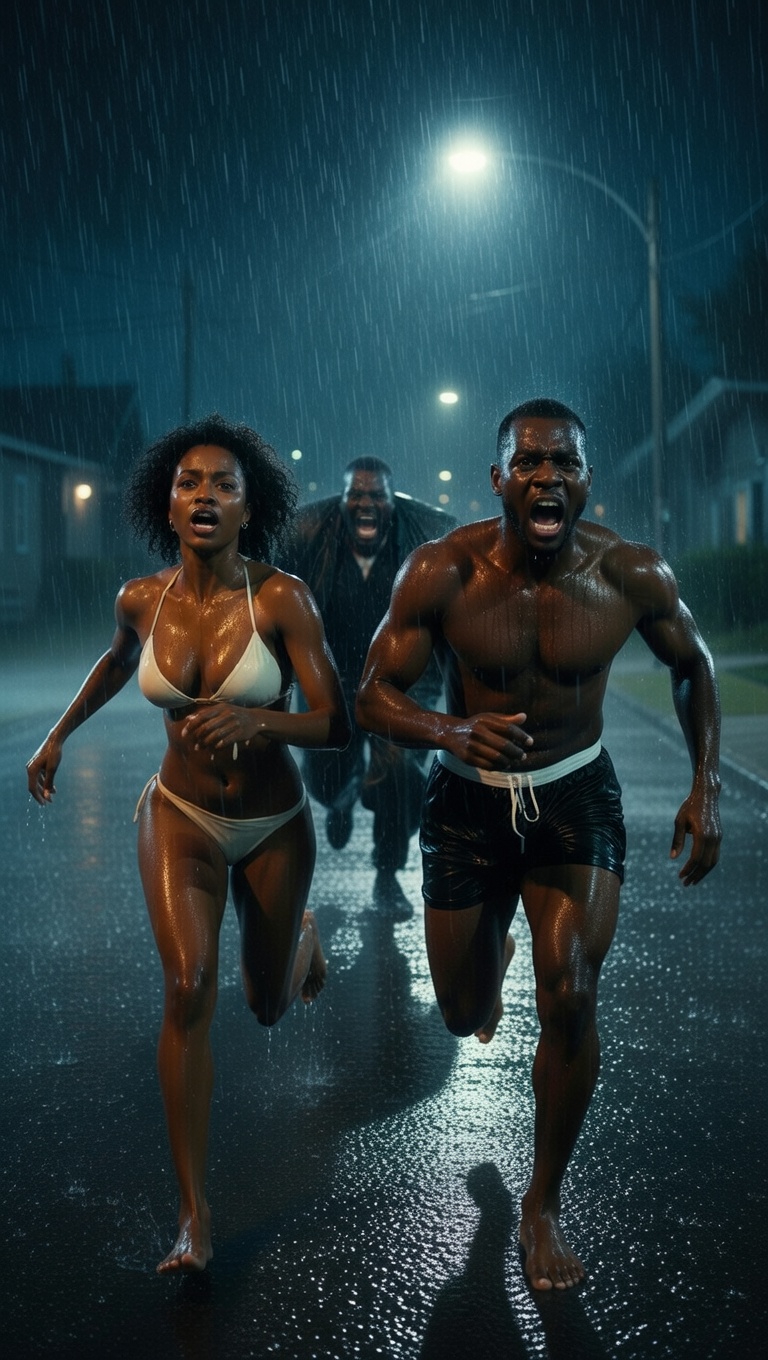
Sarah didn’t wait to think. She ran.
Not gracefully. Not heroically. She tore herself forward over twisted metal, broken glass, bodies that were already too still. The water chased her, icy fingers lapping at her ankles, then her calves. People ahead of her slipped, fell, were dragged under screaming. She didn’t stop to help. Survival didn’t allow mercy right now.
The tunnel narrowed ahead—a service access point, a maintenance hatch she remembered from emergency drills she’d never thought she’d need. But between her and safety yawned a chasm where the floor had simply vanished. A twenty-foot gap, maybe more, torn open by the quake. On the far side, the tunnel continued, sloping upward slightly. A faint glow of emergency lighting flickered there, mocking her.
The water was at her knees now, pushing, insistent.
Sarah backed up three steps, heart hammering against her ribs. She had never been athletic. Never jumped anything higher than a puddle. But the roar behind her was louder than fear.
She ran.
Three strides. Leap.
Time stretched. The void opened beneath her like a hungry mouth. She saw the water boiling below, white foam in the dark. Her arms windmilled uselessly. Then her hands slapped against the opposite edge—jagged rebar and cracked concrete biting into her palms.
She hung there, legs kicking in empty air. The current below sucked at her boots, trying to pull her down. Her fingers slipped on mud-slick stone, on her own blood. Her phone—still clutched in her left hand from when she’d tried to call 911—slipped free. It tumbled end over end, screen flashing one last time: 1% battery. Then it vanished into the black torrent with a tiny, swallowed splash.
Sarah screamed—a raw, animal sound—and hauled. Muscles tore in her shoulders. Her bad arm screamed in protest, but she didn’t care. Inch by agonizing inch, she dragged her chest over the lip, then her hips, then her legs. She rolled onto her back just as the flood reached the gap and poured through like a waterfall, filling the void she had crossed.
For a moment, she lay there gasping, rain of dust and droplets pattering on her face. The tunnel groaned again—another aftershock, smaller but vicious. More concrete cracked overhead. A chunk the size of a refrigerator smashed down twenty feet behind her, sending up a spray of water and shards.
She forced herself to her feet.
The path ahead was narrowing, the ceiling lower. Water still rose behind her, relentless. She could hear it chewing through the tunnel, eating away at supports, promising collapse.
Sarah moved.
She stumbled through ankle-deep filth, then knee-deep, using the walls for balance. Her mind raced through fragments: the faces she’d seen on the train, the child who’d been clutching a stuffed bear, the old man who’d smiled at her when she’d let him take the last seat. Were any of them still alive back there? Could she have pulled anyone with her?
No time.
A side passage appeared on her left—rusted maintenance door half-open. She shoved through it, into a narrower utility corridor lined with dripping pipes and sparking electrical boxes. The air here was colder, heavier with the smell of ozone and mold.
She kept going.
Minutes blurred into hours—or maybe only seconds. Time dissolved in adrenaline and terror. Her legs burned. Her lungs felt raw from dust. But the roar of water grew fainter behind her. The slope was upward now. Toward the surface.
Finally, a ladder—steel rungs bolted into the wall, leading to a hatch marked EMERGENCY EXIT – SURFACE. Red paint flaked under her fingers as she climbed, one painful rung at a time.
At the top, she shoved the hatch open.
Cool night air rushed in, carrying the distant wail of sirens and the sharp smell of smoke. She pulled herself out onto cracked asphalt—some forgotten service alley behind the transit authority building. Streetlights flickered erratically. In the distance, the city skyline tilted strangely against the stars, as if the whole world had been shaken loose.
Sarah collapsed to her knees, vomiting dust and bile. Then she looked back at the dark mouth of the hatch.
The tunnel was still dying down there. Groaning. Flooding. Collapsing in on itself.
But she was out.
Alive.
For now.
She didn’t cry. Not yet. She simply sat there in the flickering light, listening to the aftershocks rumble through the earth like distant thunder, and wondered how many others had made the same impossible jump—and how many never would.
The city above ground was in chaos. But down below, in the liquid dark, the real war for survival had only just begun.


About The Author